01 · the problem
A home kitchen serving its own neighbourhood has food worth selling and no channel built for it. Listing on a citywide platform is the wrong shape twice over: the seller is buried under restaurants with more capacity and better hours, and the customers it surfaces them to are mostly too far away to be worth cooking for. What the seller needs is not more reach, it is the right reach, which is a smaller and more specific problem than the incumbents are solving.
02 · what i built
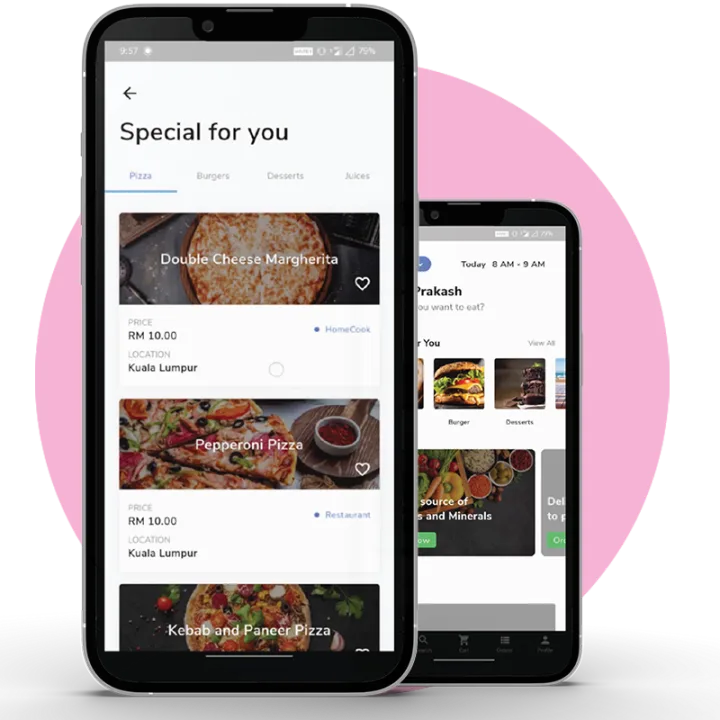
A delivery app organised around locality rather than around a catalogue. The unit is the neighbourhood: cooks and chefs are connected to the customers close enough to order from them, which is also the only distance at which home-cooked food arrives in the state it left in.
- Local first
- Discovery ordered by proximity rather than by a citywide catalogue, so a home kitchen is competing inside its neighbourhood instead of against every restaurant in the city.
- Built for the seller’s shape
- Home cooks and chefs as the merchant, rather than restaurants with fixed menus and all-day capacity.