
01 · the problem
Read-later apps are where articles go to die. Saving is frictionless and the reading never happens, so the backlog grows until the app itself becomes a source of guilt. The failure is not storage, it is that nothing lowers the cost of actually getting through what you saved.
02 · what i built
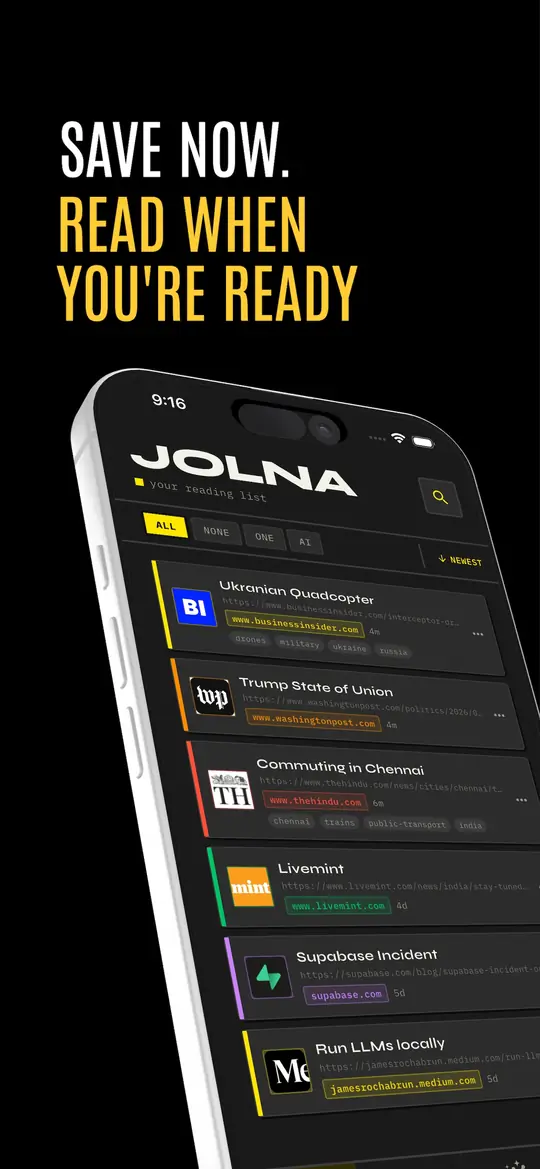
Jolna attacks the backlog from several directions at once, on the theory that no single feature fixes it. Saving has to be instant, triage has to be possible before committing to a whole article, and the reading itself has to be able to happen in situations where reading is not an option. The design rule throughout was that every screen answers "what do I read next", and anything that did not serve that stayed out.
- Save from anywhere
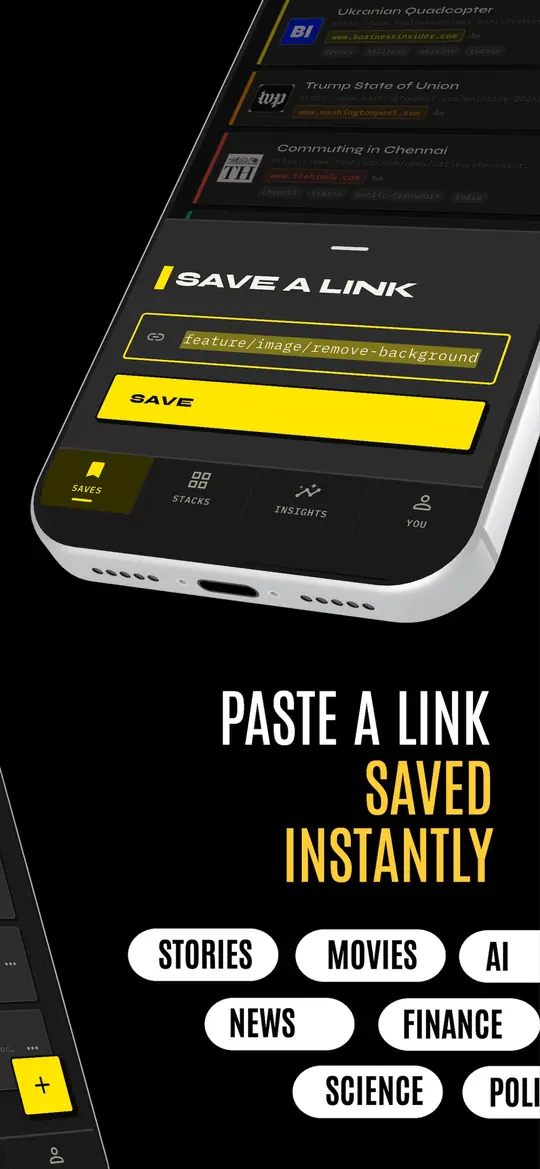
- Paste a URL, or use the share sheet from Safari, Chrome or any other app. Jolna fetches the title, domain and preview itself, and can tag the link by topic without being asked.
- A reader with nothing in it
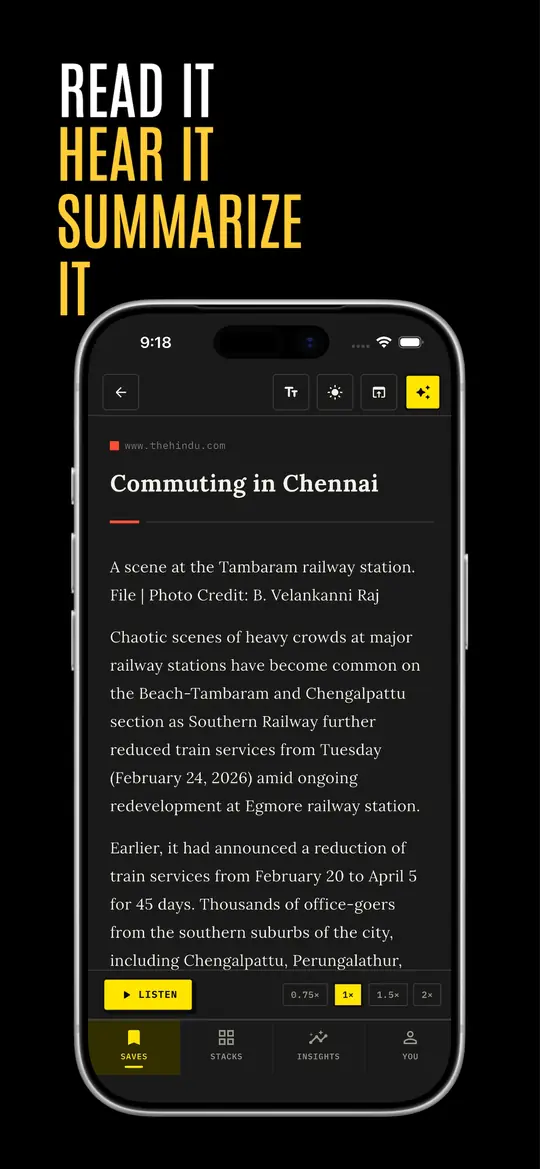
- The built-in reader pulls the full article and strips the ads, pop-ups and interstitials. Font size and dark mode are yours to set, and anything saved is readable offline.
- AI summaries
- A three to five sentence summary on demand, so a long piece can be triaged before it takes an hour. The point is deciding what deserves attention, not replacing the reading.
- Listen mode
- Any article read aloud at 0.75x, 1x, 1.5x or 2x, which turns a commute, a walk or a workout into time the queue actually goes down.
- Stacks
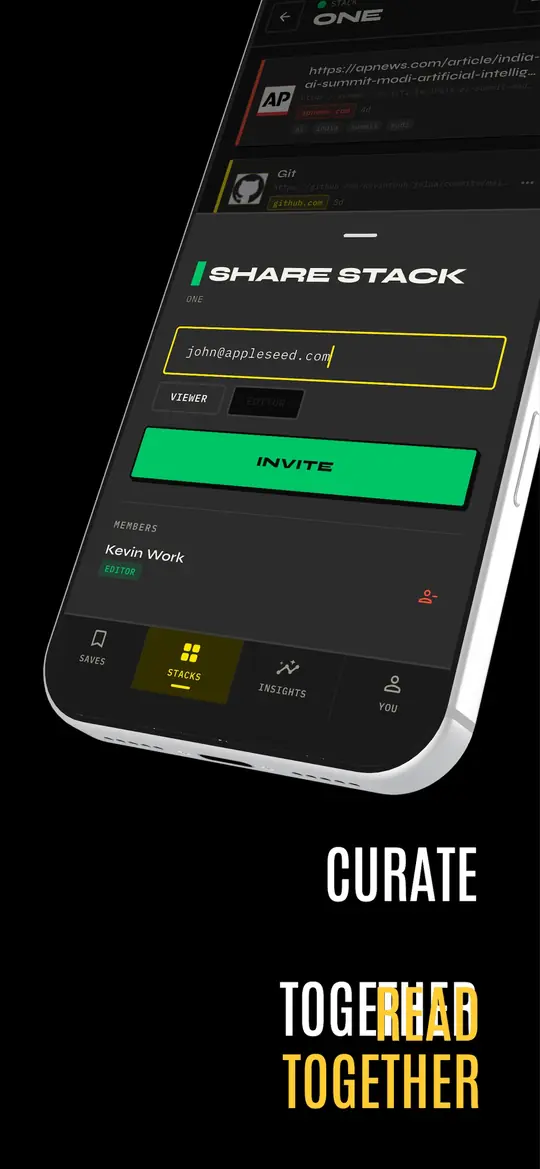
- Collections that can be shared with other people, each of them added as a viewer or an editor, so a reading list can be something a team or a group of friends keeps together.
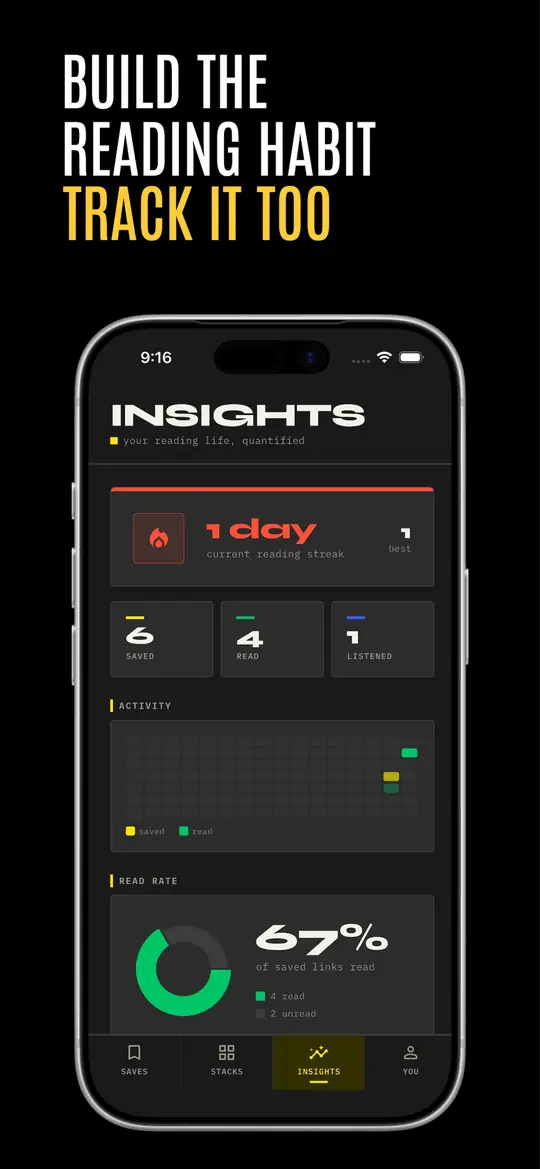
- Insights
- The reading streak, the counts saved, read and listened to, and the read rate. That last number is the one that says whether the habit is real, which is why it is in the app at all.
03 · what happened
Published on the App Store in March 2026 under Kevin’s own name, filed in Productivity and News, free, and running on iOS 13 and later.