01 · the problem
Designing for adoption rather than for holders changes what the hard problem is. An exchange for traders can assume competence and optimise for depth. A product aimed at daily use has to work for somebody with no wallet, no prior exposure and no reason to tolerate the vocabulary, while still doing the regulated, unforgiving things an exchange has to do: custody, transfers, identity checks and irreversible transactions.
02 · what i built
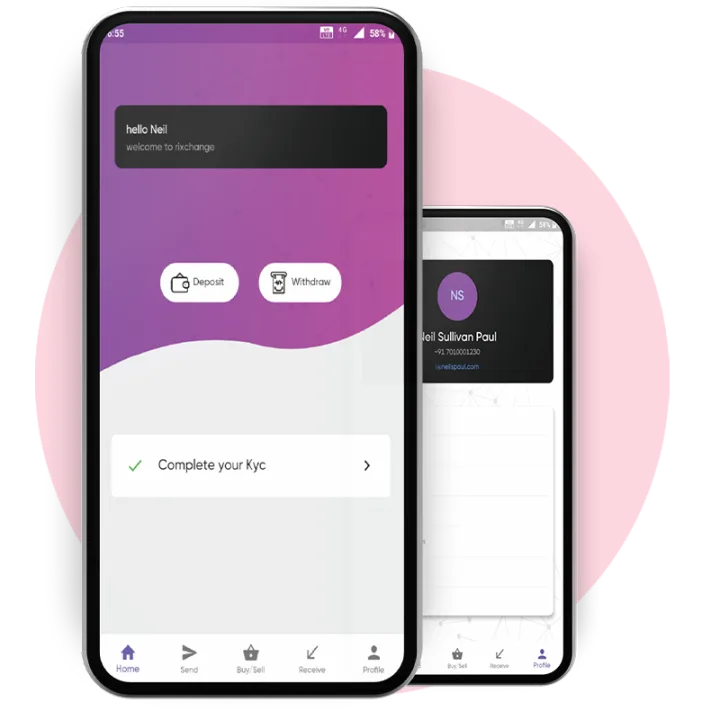
A single app covering the full round trip rather than one slice of it: depositing and withdrawing, sending and receiving, buying and selling, with KYC built into the journey rather than bolted on at the point of the first withdrawal. Putting the whole cycle in one place is what makes daily use plausible; a product that only handles the trade sends people elsewhere for everything that comes after it.
- Deposit and withdraw
- Money in and money out, which is the half of a crypto product that decides whether anybody trusts it enough to use the other half.
- Send and receive
- Peer transfers as a first-class action, because daily use means paying people, not just holding a balance.
- Buy and sell
- Exchange in both directions inside the same app, so the round trip does not require a second product.
- KYC in the journey
- Identity verification built into the flow rather than sprung on a user at their first withdrawal, which is where products in this space usually lose people.